Why a Florida Gas Station Listed at an 8% Cap Rate Isn't a Bargain
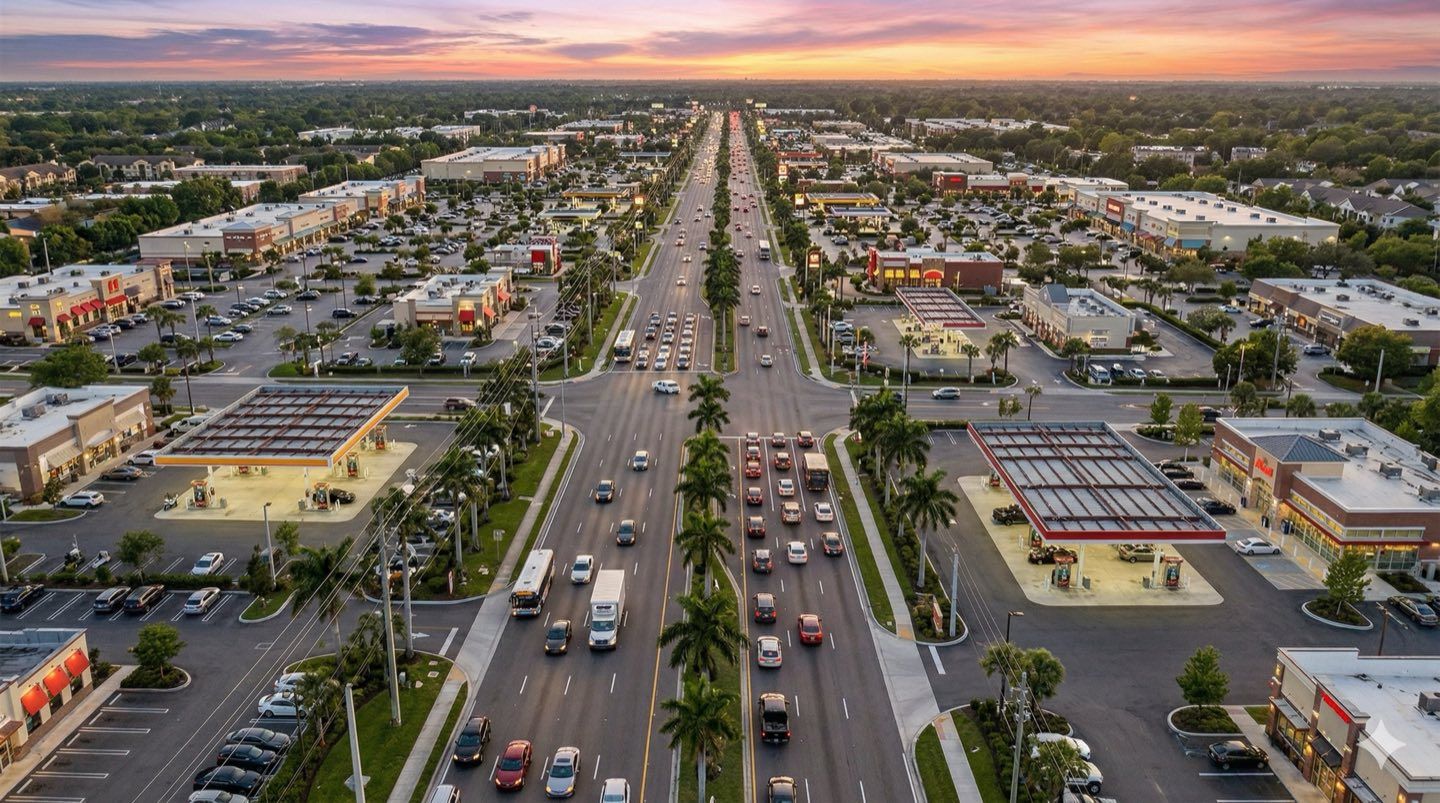
Florida is the tightest gas station market in the country. A corporate-guaranteed net lease here trades near a 5.1% cap rate, and the best Wawa and 7-Eleven deals go under 5%.
Then you open a listing site and see Florida stations advertised at 7.25%, 8%, even close to 9%. Same state, same asset class, and apparently two or three points of extra yield just sitting there.
It is almost never a bargain. It is almost always a different asset wearing the same label. The cap rate on a listing is only a number the seller’s broker calculated from an income figure they chose. Before you compare it to anything, you need to know what that income is and who is paying it.
What the 5.1% Benchmark Actually Describes
The Florida benchmark describes one specific kind of deal:
- A corporate tenant, such as Wawa, 7-Eleven, Circle K, or Murphy USA, where the parent company stands behind the rent
- An absolute NNN lease, where the tenant pays taxes, insurance, maintenance, and environmental obligations, and the landlord pays nothing
- Long remaining term, typically 15 to 20 years, with scheduled rent increases
- Income that is rent, not business earnings
That is the asset that trades at these rates:
| Tenant | Typical Cap Rate |
|---|---|
| Wawa | 4.83% – 5.20% |
| 7-Eleven | 5.00% – 5.40% |
| Murphy USA | ~5.13% |
| Circle K | 5.35% – 5.65% |
| Florida average | ~5.11% |
| Non-branded, non-corporate NNN | 7.0% – 9.0% |
That last line is the one most buyers skip. The market already prices stations without corporate credit two to four points wider. A listing at 8% is usually not beating the Florida average. It is sitting right where its tenant belongs. For the full national and state breakdown, see our 2026 Guide to Gas Station Valuations.
What the Spread Is Worth
It helps to see the gap in dollars. Take the same $250,000 of annual net operating income and price it at three cap rates:
| Cap Rate | Implied Price | Difference from 5.11% |
|---|---|---|
| 5.11% (Florida corporate NNN) | ~$4.89M | — |
| 6.50% (weaker-market NNN) | ~$3.85M | ~$1.04M less |
| 8.00% (non-corporate listing) | ~$3.13M | ~$1.77M less |
Nobody leaves $1.77 million on the table by accident. When the same income is priced that much lower, the market is telling you something about how reliable that income is.
Five Reasons a Listing Shows 7% to 9%
1. The income isn’t rent
This is the most common one. When a station is sold with its operating business, the “NOI” on the listing is often the business’s earnings, sometimes with a car wash, a quick-service restaurant, or other operations folded in. That is not a landlord’s income. It depends on fuel margins, staffing, and the buyer’s ability to run the store.
A cap rate calculated on business earnings is measuring something much riskier than rent from a corporate tenant, and it should be higher. Owner-operator deals are properly valued as a multiple of EBITDA, not a cap rate, which we cover in the valuation guide. If the listing is the business alone on leased land, see what a Florida gas station business is worth without the real estate.
2. The brand isn’t the tenant
A Shell, Chevron, or Mobil sign on the canopy usually means the operator buys fuel from that brand under a supply agreement. It does not mean the brand signed the lease. The tenant on most branded stations is the operator’s LLC, sometimes with a personal guaranty, sometimes without.
The rent is only as good as the entity promising to pay it. A single-site LLC and a Fortune 500 company are not the same credit, and the cap rate reflects that. Always ask who the tenant is and who the guarantor is, by legal name.
3. The lease is short
Cap rates widen as remaining term shrinks. A lease with four or five years left carries real re-leasing risk: the tenant may leave, renew at a lower rent, or use the renewal as leverage. It also narrows the pool of lenders and future buyers. The 5.1% benchmark assumes 15 to 20 years remaining.
4. It’s not absolute NNN
“NNN” on a listing does not always mean the landlord pays nothing. Some leases leave the roof, structure, parking lot, or canopy with the landlord. On a gas station, the most important question is who owns the underground storage tanks and who is responsible for them, including closure and cleanup if something is found. Every obligation that lands on the landlord is a cost the listing’s NOI may not show.
5. The rent was set for the sale
Sale-leasebacks are a good tool. We recommend them to owner-operators who want to pull equity out of their real estate. But when a seller leases the property back to their own operating company, the seller sets the rent. Higher rent produces higher NOI, which supports a higher price at any given cap rate.
The question to ask is whether the store can carry that rent. Ask for the operator’s sales and a rent-to-sales or rent coverage figure. Rent that the business cannot support is not durable income, no matter what cap rate it is priced at.
See current gas-station listings → Live STAX inventory with asking price, cap rate, and brand on every deal.Questions to Ask Before You Compare Any Listing
| Ask | Why It Matters |
|---|---|
| What is the NOI, exactly: rent or business earnings? | Business earnings belong in an EBITDA multiple, not a cap rate |
| Who is the tenant and who is the guarantor, by legal name? | The guarantor’s credit is what you are buying |
| How many years are left, and what are the options? | Short term means re-leasing risk and a thinner buyer pool |
| Is it absolute NNN? What does the landlord pay? | Landlord costs reduce the real yield |
| Who owns the tanks, and who is responsible for them? | Environmental exposure can outweigh years of rent |
| What are the store’s sales, and what is the rent coverage? | Rent the store cannot support will not last |
| Are the rent figures in place, or pro forma? | A projected rent is not a signed one |
If a listing cannot answer these questions clearly, the cap rate on it is not ready to be compared to anything.
When 8% Is the Right Deal
None of this means a higher cap rate is a bad investment. It means it is a different one.
At today’s borrowing costs, a leveraged buyer of a corporate NNN station at 5.1% often starts with negative leverage: the debt costs more than the property yields. That buyer is paying for credit, term, and Florida’s growth. A buyer at 8% can have positive leverage from day one. An experienced investor who knows the operator, has read the lease, and has priced the tank risk may be very well paid for taking on a franchisee tenant or a shorter term.
The mistake is not buying at 8%. The mistake is buying at 8% because it looked like a 5.1% deal at a discount.
The Bottom Line
In Florida, 5.1% is the price of corporate credit, long term, and an absolute NNN lease. A listing at 7% to 9% is usually missing at least one of those three, or its income is not rent at all. Find out which before you compare the numbers, and price the deal for the risk it actually carries.
Want a Second Read on a Listing?
If you are looking at a Florida gas station and want to know what its cap rate is really measuring, send it over. I will tell you who is behind the rent, what the lease leaves with the landlord, and where it should trade.
Keep going
Former CEO of a dozen-location gas station operating company. 250+ properties sold and leased. Specializing in NNN gas station brokerage, sale-leasebacks, and investment sales across Florida and the Southeast.